

Search
Categories
Recent Posts
- How To Improve Your Garage Door Security September 1, 2026
- Do I Need A Backup Battery For My Garage Door Opener August 16, 2026
- DIY Vs Professional Garage Door Repairs August 16, 2026
- Torsion Vs Tension Springs Comparison August 16, 2026
- Latest Garage Door Trends In Perth August 16, 2026
If you are asking why is my garage door making strange noises when opening or closing, the main thing to know is this: the sound is usually an early warning.
A healthy garage door should open and close with a steady feel and a predictable sound. When a garage door makes a grinding sound, rattling noise, banging noise, squeal, or popping sounds, one or more garage door components usually need attention. Slide & Glide handles garage door repairs, spring replacement, opener faults, motor repairs, and emergency call-outs across Perth, so these are the kinds of noise issues its team sees every day.
The good news is that most strange noises can be fixed. The bad news is that a noisy garage door that gets ignored can lead to further damage, opener strain, bent tracks, broken springs, and more expensive repairs later.
What A Healthy Door Should Sound Like
When everything is working correctly, a garage door opener should give you a steady hum, the door moves evenly through the opening, and the system comes to a clean stop at the floor.
Drive type makes a difference. A belt drive opener is usually quieter than chain drives, especially when the door is properly balanced and fitted with nylon rollers. Slide & Glide’s product and opener pages also position quieter operation as a benefit of modern systems and note that it works across major brands including Merlin, B&D, Steel-Line, Gliderol, ATA, Chamberlain, Centurion, Guardian, and Boss.
If your garage door opens with unusual sounds, excessive noise, or a harsher mechanical sound than it used to, that change matters more than the exact volume.
Safety Comes First
Before you do any DIY inspections, think about safety.
Garage door springs, lift cables, and drums are high-tension parts. Slide & Glide says spring and cable work needs to be handled carefully, and its About page says the business is an Australian Garage Door Association member and works on high-tension systems. Tyler Gefterman, the owner, says he has more than 12 years in garage doors, gates, and construction across Perth.
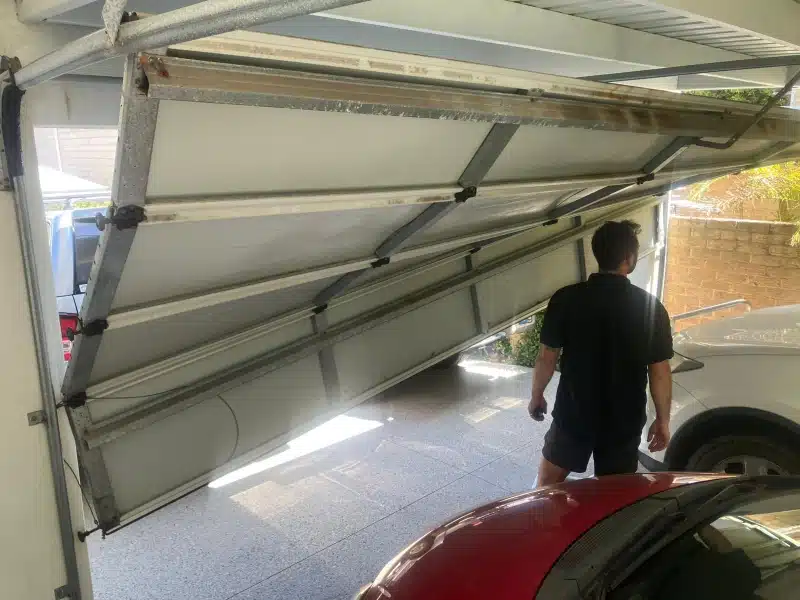
If the door is stuck halfway, feels unusually heavy, or could fall quickly, stop there. Do not loosen bolts, do not start adjusting springs, and do not assume the manual release is safe to use if the door feels unstable. That is the point where professional attention matters.
Start By Noticing The Change
Most people do not call because they suddenly know what part has failed.
They call because the sound has changed.
A loud garage door might start with a small rattle. A smooth opener might begin to hum harder than usual. The door may pause at door halfway, or the garage door motor may sound like it is straining. That is often how a small issue first shows up in real life.
That is how these jobs usually go. What sounds like a simple noise issue can turn out to be something deeper once the system is inspected. In some cases, a technician can get there quickly, find the problem on the spot, and sort it then and there. In others, what seems like a remote or opener issue ends up tracing back to a failed motor, rusted hardware, or other worn parts that need replacing.
That is why strange noises matter. They are often the first sign that one part is forcing the rest of the system to work harder than it should.
Grinding Usually Means Friction
A grinding sound or scraping sound usually means metal is contacting where it should not.
Common causes include:
- worn rollers
- bent tracks
- dry bearings
- brackets that have shifted
- debris in the track
- a door that is slightly off balance
Across Perth, we often see strange noises traced back to worn rollers, tired hinges, or tracks that have shifted out of alignment, especially in coastal suburbs and busy family homes where the door gets a lot of daily use.
This is especially common on older systems with steel rollers, where too much wiggle room in the roller stem or hinge can create vibration and rubbing. Left too long, this kind of friction can mark the tracks, stress the opener, and cause premature wear on moving parts.
Banging Usually Means Stop And Check
A banging noise is not one to ignore.
Sometimes it is panel slap from loose hardware or loose components. More often, it points to broken springs or a door that has lost balance. If the sound is followed by a door that suddenly feels heavy or drops harder than normal, stop using it. Slide & Glide’s spring replacement page says a failed spring can make the door unsafe and overload the motor.
This is one of those certain noises that should push you toward a professional service, not another test run.
Squeaking Usually Means Dry Contact Points
Squeaks are common and often easier to fix than grinding or banging.
They usually come from dry hinges, roller stems, or other moving components that need correct lubrication. A light silicone spray is usually more useful than thick grease in Perth because dust and grit stick to the wrong product very quickly. In some spots, white lithium grease may be suitable, but only where the owner’s manual allows it and only in small amounts.
If the squeak comes back quickly, the issue may be more than lubrication. It may be aging springs, worn rollers, or hardware sitting out of square.
Rattling Usually Means Something Has Worked Loose
A rattling noise is usually vibration.
That vibration often comes from:
- hinge screws backing out
- opener rail mounts loosening
- panel struts moving
- track brackets shifting
- rollers with too much play
- bolts that need checking
Sometimes tightening loose components helps straight away. Sometimes the rattle keeps returning because the system is drifting out of line. That is why repeated rattles deserve more than a quick tighten and forget. Slide & Glide’s Perth repair content repeatedly ties noisy doors back to alignment drift, worn rollers, loose fittings, and balance problems.
Popping Sounds Need Respect
Popping sounds and sharp ticks can come from torsion springs shifting on the shaft, coils moving under load, or hardware snapping slightly into place as the door travels.
If those sounds are paired with jerky travel, uneven closing, or visible gaps in a spring coil, stop using the opener. Slide & Glide also works on extension springs and torsion-based systems, and its spring repair content makes it clear that tension faults can make the door unsafe very quickly.
That is not a “wait and see” sound.
Clicking Or Humming Often Points To The Opener
Not every noise starts in the door itself.
If the garage door motor hums but the door opens only a little or not at all, the issue could be:
- a weak capacitor
- stripped gears
- a travel-limit problem
- safety sensors
- a door that is too heavy because it is off balance
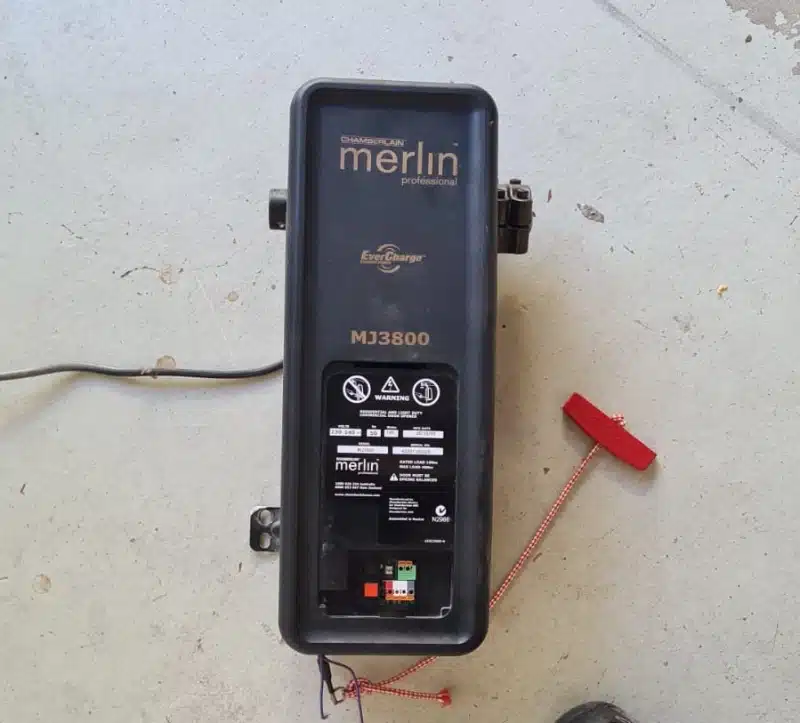
Slide & Glide has separate pages for openers and garage door motor repairs and says it works on the major opener brands commonly installed in Perth homes. That matters because a Merlin opener fault does not always sound or behave the same way as a B&D, ATA, or Centurion unit.
So yes, the opener may be the source of the noise, but sometimes the motor is reacting to drag or weight elsewhere in the system.
A Few Safe Checks You Can Do Yourself
There are a few useful checks you can do without taking anything apart.
With the power off, you can:
- look down the vertical and horizontal tracks for bends or screws sticking into the path
- rotate rollers by hand and feel for flat spots
- check hinges, brackets, and visible hardware for anything loose
- wipe the photo-eye lenses with a soft cloth
- look for rust, cracked brackets, or frayed cables
- listen through one full opening and closing cycle
A balance check also helps. Disengage the opener using the manual release, then lift the door halfway. If it rises, drops, or feels heavier than expected, the system is probably out of balance and needs a thorough inspection. Slide & Glide says its repairs include safety checks, balance checks, and written service reports.
These checks can help you notice the problem. They do not replace expert repair when the door feels unstable.
Lubrication Helps, But It Has To Be Done Properly
Lubrication is one of the easiest ways to keep your garage door quieter, but only if it is done correctly.
Use a light silicone spray on the right metal-to-metal contact points. In some cases, a little white lithium grease is suitable, but do not flood the system. Do not grease the running surface of the tracks. In Perth, the wrong lubricant can trap dust and turn into abrasive paste.
The goal is simple: reduce friction on the right moving parts, stop poor lubrication from causing more noise, and protect the system from wear and tear.
Perth Conditions Change The Sound You Hear
Perth weather is part of the story.
Closer to the coast, salty air carried in by the Fremantle Doctor can speed up corrosion on hinges, tracks, springs, brackets, and other exposed steel parts. Even with durable materials like Colorbond steel, coastal homes usually need more regular cleaning and maintenance to stay ahead of rust and wear.
Inland suburbs such as Joondalup, Wangara, Midland, Balcatta, and Ellenbrook often show a different pattern: more dust, more heat, and more wear from repeated daily use. Extreme temperatures can also change the sound slightly. In cooler weather, lubricants thicken and metal contracts. In summer, heat expansion can affect seals and panel movement.
That is why a noisy door in Fremantle may have a different underlying cause from one in Joondalup, even if the sounds seem similar at first.
When Noise Means Stop Immediately
Some sounds mean “book it in.” Others mean “stop now.”
Call for repair if you have:
- a sudden bang followed by a heavy door
- repeated popping with uneven travel
- a garage door motor humming with no lift
- a door stuck halfway
- visibly frayed cables
- a door that has come off track
- scraping that worsens every cycle
At Slide & Glide we du 24-hour emergency repairs in Perth for jammed doors, opener faults, and spring failures. If the door feels unsafe, unstable, or difficult to control, this is the point for professional help rather than more testing.
Repair Or Replace?
Most noise-related faults respond well to repair.
Replacing worn rollers, aligning tracks, correcting limits, replacing springs, and fixing opener faults is often enough. A new garage door only becomes the better option when the problem comes from age-related fatigue across multiple parts, major corrosion, badly damaged panels, or an opener that is already near the end of its life. Slide & Glide installs sectional, roller, and tilt systems and works across the same brands it services, so if replacement is genuinely the smarter path, it can advise on that too.
The Bottom Line
If your garage door is making strange noises when opening or closing, it is not being difficult for no reason.
Grinding, banging, rattling, squeaking, humming, and popping all point to different kinds of stress in the system. In Perth, salt, dust, heat, and daily use can make those sounds appear earlier than people expect. If the noise is new, getting worse, or paired with rough movement, a heavy feel, or a door stuck halfway, act on it early. That is the best way to avoid costly repairs, protect the essential parts, and get the system back to smooth operation.

- How To Improve Your Garage Door Security - September 1, 2026
- Do I Need A Backup Battery For My Garage Door Opener - August 16, 2026
- DIY Vs Professional Garage Door Repairs - August 16, 2026

Social Media