

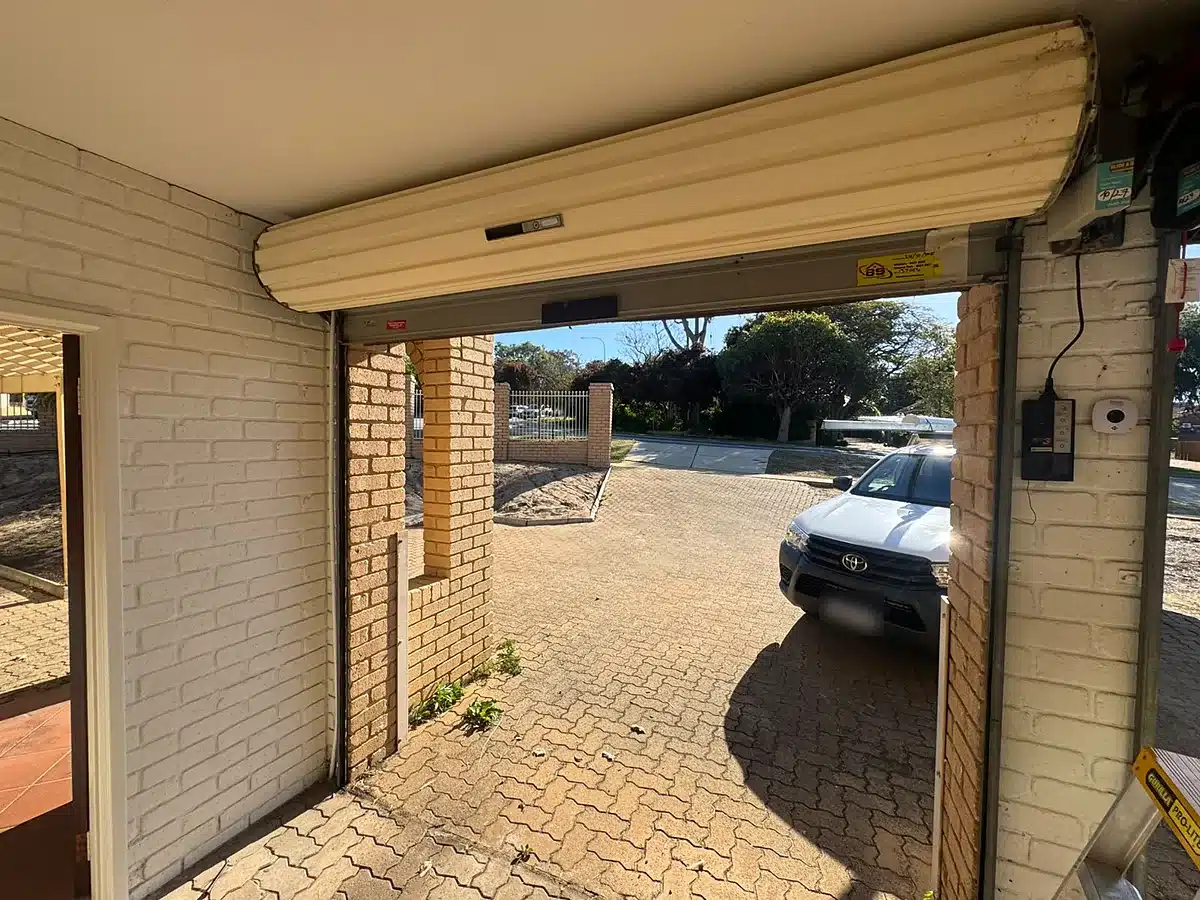
A roller door looks simple: a steel curtain that rolls up into a drum above the opening. So when garage renovation ideas are on the table, it’s fair to ask whether you can install one yourself and save on labour.
The honest answer is that a confident DIYer can, but the job involves heavy lifting, precise measurements and springs that hold a lot of stored energy. Get it wrong and you risk an unbalanced door, premature wear or serious injury.
This comprehensive guide explains how to install a roller door, the tools you’ll need, where DIY installs go wrong and when a professional installation is the smarter choice. It draws on what our technicians see on repair jobs across Perth.
What’s Involved In Installing A Roller Door
A roll up garage door has fewer components than a sectional door, but every one has to be fitted accurately. A typical roller door kit includes:
- The door curtain, rolled around a central shaft, with the springs hidden inside the drum
- Two mounting brackets that hold the shaft, one fixed to the wall or frame each side of the door opening
- Vertical guides that the curtain slides in, one guide rail on each side
- Fixings, a lock and, if you’re going automatic, a motor
The process runs in order: measure the opening, fix the brackets level, lift the curtain onto them, apply spring tension, fit the guides, then check the door balance and run safety checks. Each step depends on the one before it, so a small error early on shows up later as a door that drags, jams or won’t lock.
Measure Before You Order
A perfect fit starts with accurate measurements. Measure the width of the opening at the top, middle and bottom, and the height on both sides, then use the smallest figures. The ordering width for a roller door usually includes the guides, and most manufacturers allow a fitting tolerance of around 5 to 10mm, so check the technical specifications for the door size you’re ordering.
Check the side room for the brackets, the headroom above the opening for the drum and that the floor is level. Our guide to garage door sizes covers standard openings in Australia. Double check everything before you order, because a door made to the wrong size can’t simply be trimmed to fit.
Tools And Equipment You’ll Need
Having the right tools on hand makes the job safer and faster:
- Tape measure, marking pen and spirit level
- Power drill with the right bits for your wall
- Socket set and spanners for the brackets and each U-bolt
- A sturdy ladder for each person, or a stable work platform
- Hacksaw and file, in case a guide needs trimming
- Gloves, safety glasses and steel-capped boots
Most importantly, you need a second person. A single roller door can weigh over 40kg, and lifting the curtain onto the brackets is a two-person job at minimum.
How To Install A Roller Door, Step By Step
Here’s an overview of the process. Always follow the manufacturer’s instructions for your specific door, because fixing methods and spring settings vary between models.
- Prepare the opening. Check that the wall or frame is structurally sound and that the opening is level. Fasteners vary with the mounting surface, so use fixings rated for brick, timber or steel.
- Mark and fix the brackets. Mark each mounting bracket at the same height, drill pilot holes so the main bit doesn’t wander, then fix the brackets with the right screws or anchors. Use a spirit level to make sure they’re perfectly level, then tighten every bolt so they’re rigid.
- Lift the curtain into place. With your second person, lift the rolled curtain from the ground onto the brackets, keeping it tied so it can’t unroll, and secure the shaft with the U-bolts.
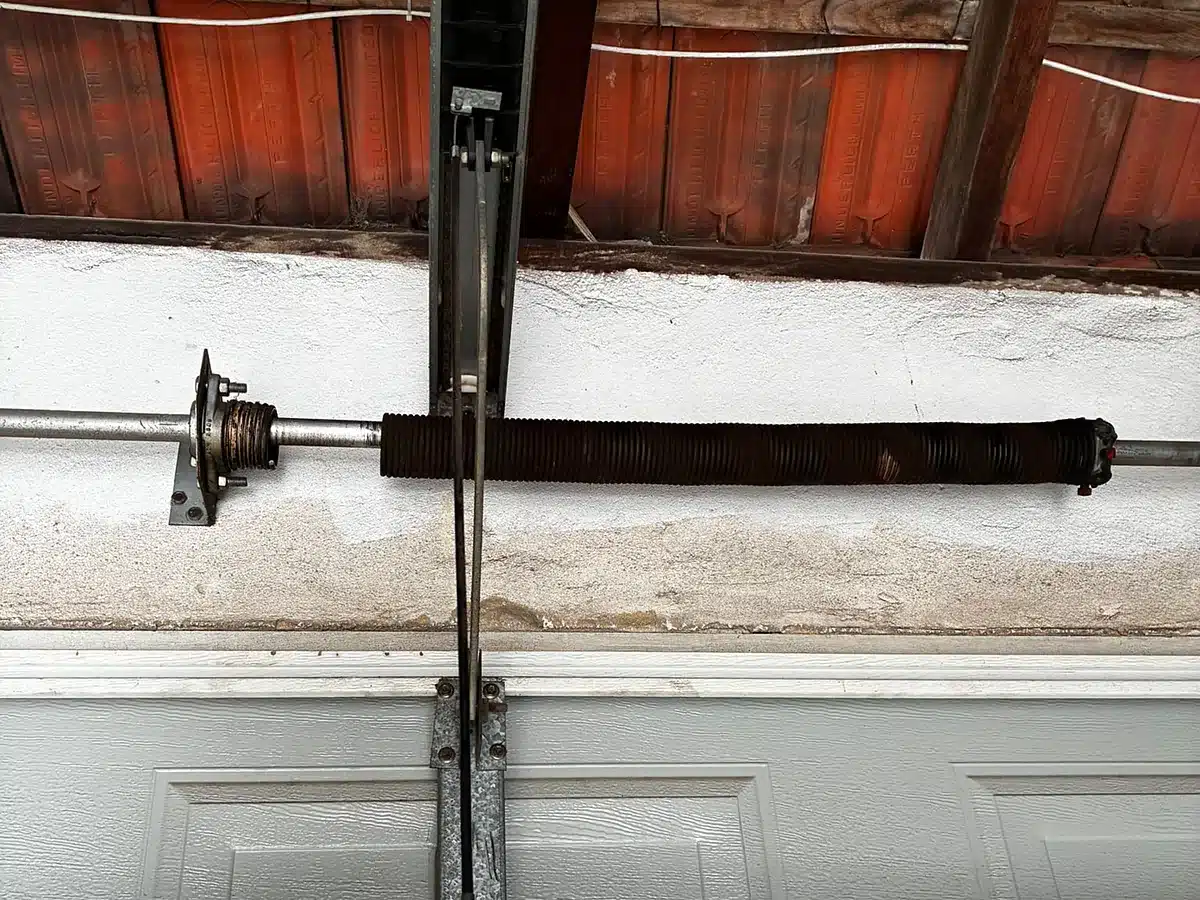
- Apply spring tension. Rotating the door roll applies pre-tension to the springs inside the drum. Initial spring tension must be set before the door is fully lowered, and the amount depends on the door’s weight and height. Note: this is the most dangerous step, because tensioned springs hold enough stored energy to spin the axle with real force.
- Fit the vertical guides. Lower the curtain carefully and fit the guides so they’re perfectly plumb and parallel, with an even gap to the curtain.
- Run a balance test. Unlock the door, lift it halfway and let go. A balanced door stays put or moves only slightly. If it drops or shoots up, stop before you proceed: adjusting the tension means working on a loaded spring, so call a technician.
- Complete the safety checks. Test the lock and stoppers, then run the door through several full cycles. If you’re fitting a motor, set the limits and verify the obstruction sensing before regular use.
Where DIY Roller Door Installs Go Wrong
These are the mistakes that cause the most trouble:
- Brackets out of level: one of the most common mistakes. The door rolls unevenly, rubs the guides and wears early.
- No fitting tolerance: guides fitted too tight make the door bind and drag.
- Wrong fixings or a weak wall: the wrong fixings, or a wall that can’t take the load, compromise the whole installation.
- Incorrect spring tension: an unbalanced door is heavy to lift, slams shut and strains any motor, leading to premature wear.
- Poor sealing: gaps at the sides or bottom can allow water ingress during winter storms.
Most of these can be corrected, but fixing them usually costs more than getting the job right the first time.
The Real Risks Of A DIY Installation
The biggest risk is the springs. Roller door springs are pre-tensioned and hold stored energy. If a shaft slips or a U-bolt is loosened with tension on the springs, the axle can spin violently and cause serious injury. Handle pre-tensioned springs with extreme care, and if you’re not confident, stop and call a professional.
Then there’s the weight. Lifting 40kg or more onto brackets at head height, from a ladder, is risky without help. Finally, check your warranty, as some manufacturers require professional installation for the warranty to apply. If you’re unsure where to draw the line, our article on DIY vs professional garage door repairs covers similar ground.
DIY Vs Professional Installation: Which Is Right For You?
DIY can make sense if you’re experienced, have a capable helper and are fitting a new door to a sound, empty opening. A professional installation is the better choice if:
- The opening isn’t level or the wall needs work
- You’re adding a motor and want it set up to Australian standards
- The door is wide, heavy or a custom size
- You want a warranty on the workmanship
When our team installs a roller garage door, it starts with a free measure and a fixed quote. We fix the brackets, set the spring tension for the door’s actual weight, balance the door by hand before any motor goes on and test it through several full cycles. A standard garage door installation takes about 4 to 5 hours, and your new door is set up for reliable operation and backed by our workmanship guarantee. If an older door is beyond saving, we can replace it and take the old one away.
Frequently Asked Questions
Here are quick answers to common questions about installing a roller door.
Can I Install A Garage Door By Myself?
It’s possible for an experienced DIYer with a helper, but it isn’t a one-person job. The weight of the curtain and the stored energy in the springs make it unsafe to attempt alone.
How Much Does It Cost To Get A Roller Door Installed?
On our 2026 price list, a new roller door supplied and installed costs about $1,200 to $3,000 for a single and $2,000 to $4,200 for a double, depending on size, finish and motor. See our garage door prices for the full breakdown.
How Long Does It Take To Install A Roller Door?
A professional can usually complete a standard install in 4 to 5 hours. If it’s your first time, allow considerably longer.
How Do I Know If My Roller Door Is Balanced?
Lift the door halfway and let go. If it stays in place, the balance is right. If it drops or rises, the spring tension needs adjusting. Our guide on how to service a roller door explains what else to check.
Get Your Roller Door Installed Right The First Time
Knowing how to install a roller door is useful even if you decide not to do it yourself, because you’ll recognise a good install when you see one. If you have the skills, a helper and the right tools, take your time and follow the manual. If anything about the springs, the wall or the weight makes you hesitate, it’s time to call in a professional and have it done safely.
Slide & Glide installs roller doors across Perth with a free measure, a fixed quote and a workmanship guarantee. Book your free measure and quote or call 0489 266 468 to talk to our team today.

- How To Tension A Roller Door (And When To Call A Pro) - October 18, 2026
- How To Program A B&D Garage Door Remote - October 18, 2026
- How Long Do Garage Doors, Motors And Springs Last? - October 18, 2026
Social Media