

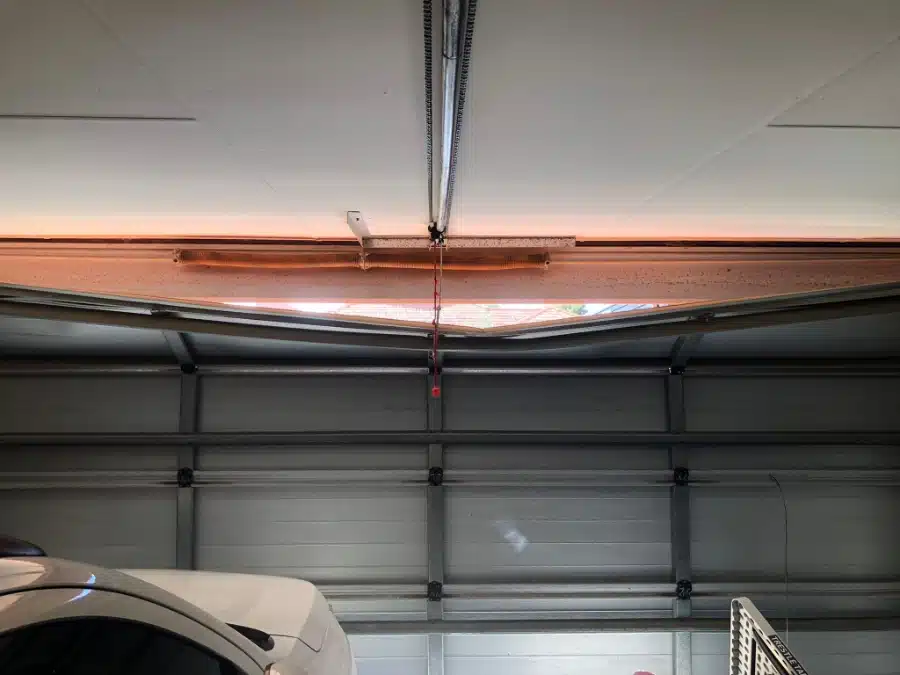
Most homeowners notice it before they understand it.
The door sounds different. It hesitates. It shudders near the floor. The opener starts working harder than it used to. That is usually the moment to stop asking whether the garage door is “still okay” and start asking a better question: how do I know if my garage door needs professional maintenance?
A good rule is simple. If the door no longer feels normal, it probably needs attention. We are a Perth-based business in Osborne Park, services suburbs including Joondalup, Morley, Midland, Balcatta, Fremantle, Rockingham, Wangara, Ellenbrook, and Canning Vale, and says its team handles repairs, servicing, opener work, and emergency support across the metro area.
The First Signs Your Garage Door Needs Attention
Most garage door problems start with a change in sound or movement.
Common signs your garage door needs a professional check include unusual noises, jerky movements, uneven movement, visible wear, delayed response times from the garage door opener, or a door that gets stuck halfway. These are early signs that the mechanical system is under strain. They do not always mean a major repair is coming, but they do mean the system should be looked at before a minor issue spreads into other components.
Watch for:
-
unusual sounds such as grinding, scraping, rattling, or banging sounds
-
the door moving unevenly or shaking during travel
-
the opener sounding strained
-
frayed cables, rust, or loose brackets
-
misaligned tracks
-
visible damage or visible wear on rollers, hinges, springs, or panels
-
the door reversing on its own
-
a door that no longer operates smoothly
Those signs your garage door is under pressure are especially important in Perth, where heat, dust, coastal salt, and heavy daily use all speed up wear and tear.
What Different Noises Usually Mean
A well maintained garage door should not be silent, but it should sound steady.
Grinding or scraping usually points to worn rollers, poor lubrication, or tracks that are no longer running true. Rattling often means hardware has loosened over time. A loud bang is an obvious sign of broken springs on a sectional door or roller door. If the opener hums but the door barely moves, the problem may be the opener, but it may also be a balance issue or extra drag elsewhere in the system. We have dedicated pages for garage door opener work, motor repairs, and garage door repair, which matches how often these faults overlap in real jobs.
That is why unusual noises matter. They are often the first clue that the garage door needs more than routine maintenance.
What You Can Check At Home
You do not need to take the system apart to spot problems early.
Once a month, regularly inspect the door through a full opening and closing cycle. Stand back and look for uneven movement, wobble, scraping, or hesitation. Then check the visible parts:
-
tracks
-
rollers
-
hinges
-
springs
-
cables
-
brackets
-
weather seals
-
opener sensors
You are looking for visible signs of rust, bends, frayed cables, loose fittings, minor dents, and anything else that suggests the door’s structure is changing.
Wipe the sensor lenses with a soft cloth. Keep debris out of the tracks. If the door is near the coast, wash the lower fittings and exposed steel more often. Perth’s salt-heavy sea air, especially around Fremantle and Rockingham, accelerates corrosion on tracks, hinges, springs, and brackets. Inland suburbs like Joondalup and Wangara often see more dust and heat-related expansion instead.
A Balance Test Tells You A Lot
One of the simplest checks is a balance test.
Pull the emergency release and lift the door by hand to about waist height. If it stays there, that is a good sign. If it drops, rises, or feels much heavier than expected, the spring balance may be off.
That is not a DIY fix.
Broken springs and incorrect spring tension are serious safety issues. If the door suddenly feels heavy, drops unexpectedly, or makes a loud bang before stopping, stop using it and book a qualified technician. We handle high-tension spring, cable, and opener faults across Perth and follows
If the balance test fails, the garage door needs professional attention.
Why Garage Doors Slow Down
A slow door usually has a reason.
Sometimes it is poor lubrication. Sometimes it is old rollers dragging through the tracks. Sometimes the opener is fine and the real issue is extra load from worn springs or a door that is no longer balanced properly. If the system slows down, strains, or sounds rough, that is a clear sign something inside the mechanical system is no longer working efficiently.
That matters for convenience, but also for security and safety. A slow or unreliable door is more likely to stick, reverse unexpectedly, or stop partway through travel. That can leave the garage open, place extra load on the opener, and lead to further complications if nothing is done.
Why Perth Conditions Matter More Than People Think
Perth weather plays a significant role in garage door wear.
Near the coast, the Fremantle Doctor carries salt inland. That salty moisture speeds up corrosion on hinges, brackets, springs, cables, and tracks. In hotter inland suburbs, repeated heat cycles can affect seals, fasteners, and alignment. Add dust, regular opening cycles, and the weight of steel doors or timber-look panels, and it becomes easier to see why regular garage door maintenance matters.
We position our doors and hardware around Perth conditions, including Colorbond steel sectional and roller systems, and supports brands like Steel-Line, Merlin, B&D, Gliderol, ATA, Centurion, Chamberlain, Guardian, and Boss.
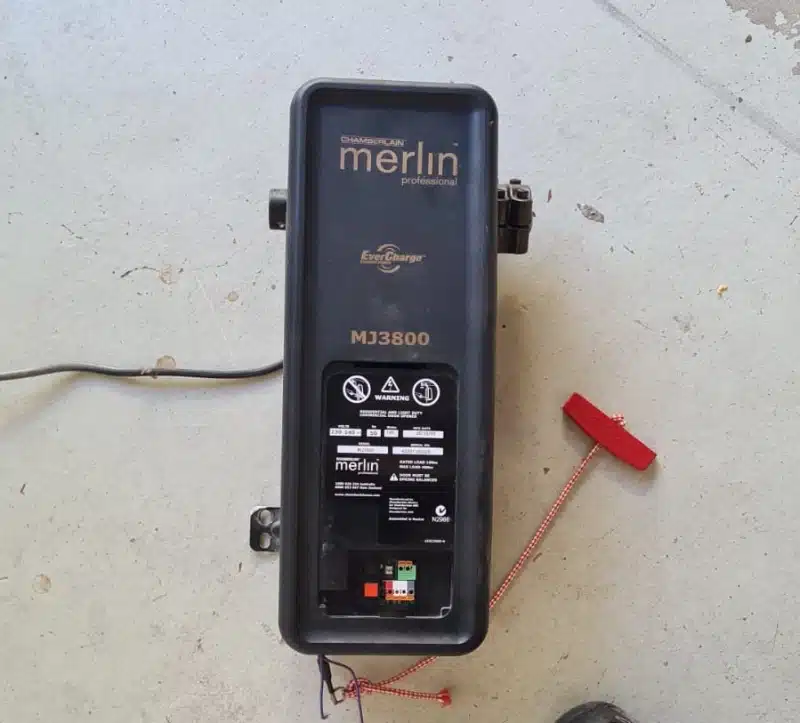
That kind of brand experience matters because a Merlin garage door opener does not always fail the same way as a B&D or Centurion system, and different components wear differently.
What Needs Professional Repairs Straight Away
Some faults can wait for a booked garage door service. Others cannot.
Get professional help immediately if:
-
the door is stuck halfway
-
a spring snaps
-
a cable breaks or starts fraying badly
-
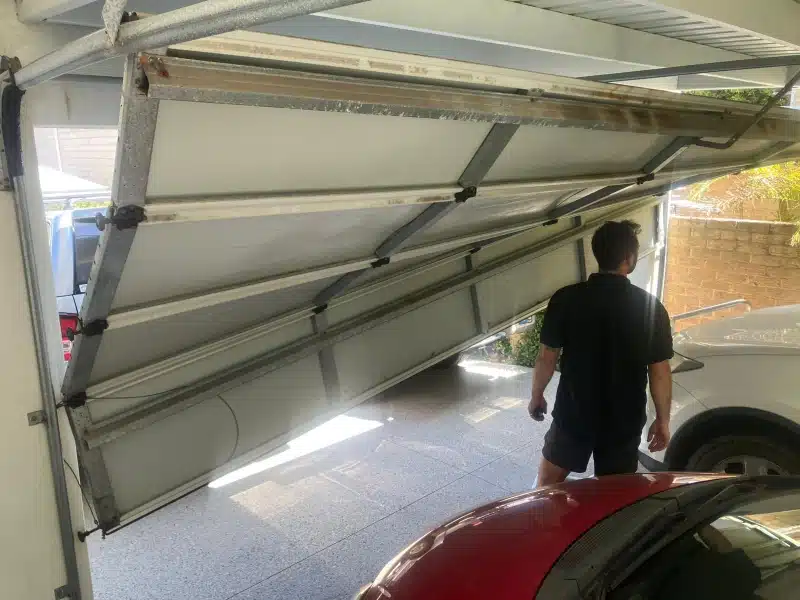
the door comes off its tracks
-
the opener runs but the door does not move
-
the auto-reverse fails
-
the door becomes visibly crooked
-
you hear a loud bang and the door suddenly feels very heavy
This is where emergency garage door repairs matter. Our emergency support is available around the clock, and several suburb repair pages mention priority or same-day availability when the door is jammed, stuck open, or posing a safety risk.
Do not keep forcing the opener to run. That is how a repair becomes further damage.
What A Professional Service Should Actually Include
A proper professional service is more than a quick spray and a quick glance.
A real garage door service should include:
-
checking the garage door opener
-
inspecting springs, rollers, hinges, cables, and tracks
-
checking balance and travel
-
testing safety features and auto-reverse
-
tightening loose hardware
-
applying suitable lubricant to the right moving parts
-
checking for premature wear
-
identifying whether the issue is maintenance, repair, or part replacement
Our Wangara repair page explains that each ute carries common parts for openers, springs, cables, and sensors, and that every job includes safety checks, balance tests, and a written garage door service report. That is the kind of first-hand detail homeowners should look for because it explains what the repair service actually does, not just what a service “should” include.
What Real Slide And Glide Jobs Suggest
The company’s public reviews give a better picture than generic claims.
On the About page, one customer says Ro arrived within two hours, carried out a thorough inspection, and resolved the issue on the spot. Another says Marcos got a noisy garage door opening smoothly again. Another review describes a remote issue that turned out to involve a failed roller door motor and rusted parts that needed replacement, with yearly servicing recommended afterward. Those examples are useful because they reflect the actual pattern homeowners see: the noise or remote issue is the obvious symptom, but the technician often finds the underlying fault in the motor, rollers, springs, or hardware.
That is the difference between a surface fix and a proper diagnosis.
Why Maintenance Matters Even If Nothing Feels “Broken”
The point of maintenance is not to sell a fix. It is to stop the door getting to the point where it needs one.
Regular garage door maintenance helps the system operate smoothly, protects the opener from unnecessary load, reduces the chance of costly repairs, and helps preserve curb appeal, energy efficiency, and security. It also keeps small signs from becoming major interruptions on a work morning, school run, or late-night return home.
For most Perth homes, We recommend a professional service every 12 to 18 months is a reasonable baseline, with shorter intervals in high-cycle, dusty, or coastal environments.
The Bottom Line
If you are wondering how do I know if my garage door needs professional maintenance, the answer is usually simple: you notice a change.
A noisier door, a slower opener, visible wear, uneven movement, frayed cables, or tracks that no longer look straight are all signs worth acting on. Not because every fault is major, but because the earlier you deal with them, the easier they are to fix.
If your garage door is showing those signs, book the garage door service before the problem starts running the house.

- How To Improve Your Garage Door Security - September 1, 2026
- Do I Need A Backup Battery For My Garage Door Opener - August 16, 2026
- DIY Vs Professional Garage Door Repairs - August 16, 2026

Social Media