


Garage door springs are the reason a heavy garage door can lift smoothly with one hand or with a garage door opener. They counterbalance the garage door’s weight, reduce strain on the door mechanism, and help the door closes and opens in a controlled way. When a door spring wears out or a broken garage door spring occurs, the whole garage door system can become unsafe fast. You might hear a loud bang, notice strange noises during door opening, or find the garage door feels unusually heavy and will not close properly.
This guide explains understanding garage door spring lifecycles and safety in plain terms. You will learn how long garage door springs last, what shortens spring lifespan in Perth conditions, how to spot signs of wear early, and why professional assistance matters when high tension involved components need spring replacement. Along the way, I will share real-world patterns we see in garage door service callouts and what experienced technicians check to prevent sudden failures and costly repairs.
Why Garage Door Springs Matter In Every Garage Door System
Garage door springs sit at the centre of the door system. Their job is to store energy when the door closes, then release that energy to help lift the door as it opens. That stored energy is why garage door springs are among the most dangerous garage door components when handled incorrectly.
Here is the practical way to think about it:
- A properly installed spring does most of the heavy lifting. A properly tensioned spring does about 80% of the lift, leaving the garage door opener to guide and control movement.
- When springs are worn out springs or under-tensioned, the opener and cables pick up the load. That creates unnecessary strain and can lead to garage door spring repair, cable issues, or damage to garage door tracks.
- When the spring system is over-tensioned, the door may lift too quickly and become hard to close properly, which is also a garage door safety concern.
If you have heavy garage doors, insulated panels, or a larger garage door panel design, spring selection and proper installation become even more important. The door weight significantly affects the type and size of springs needed for proper operation, influencing both cost and lifespan.
The Two Main Types Of Garage Door Springs
There are two main types of springs used in most residential garage doors: torsion springs and extension springs. Both can work well when properly installed, properly balanced, and maintained, but they behave differently and have different safety considerations.
Torsion Springs
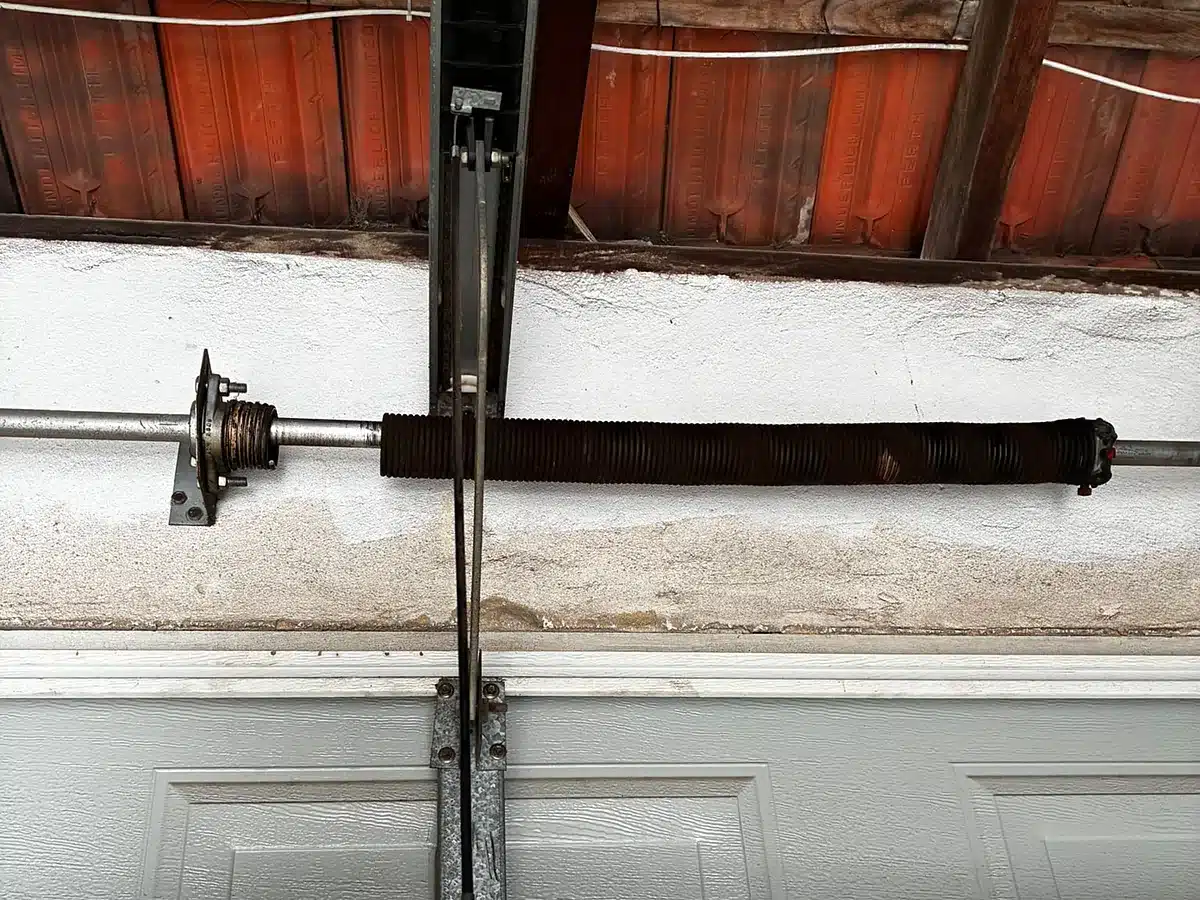
Garage door torsion springs are typically installed above the garage door, mounted on a shaft. Torsion springs work by twisting as the door closes, storing energy in tightly wound coils. When the door opens, the torsion spring unwinds in a controlled way to lift the weight of the door.
Key points that matter for lifecycle and safety:
- Torsion springs provide better control over the garage door’s movement due to their central placement and balanced force distribution.
- Torsion springs typically have fewer parts than extension springs, which can lead to more reliable operation and smoother operation.
- When a torsion spring breaks, you may hear a loud bang, but the spring usually remains on the shaft rather than flying across the garage.
Extension Springs
Extension springs are usually found along the sides of the garage door, running parallel to the horizontal tracks. Extension springs work by stretching as the door closes. Springs stretch to store energy, then contract as the door opens to assist lift.
Key points that matter for lifecycle and safety:
- Extension springs are more cost-effective and easier to install than torsion springs, but they require safety cables to prevent injury if they snap.
- Extension springs have more moving parts, often including pulleys and additional attachment points.
- If an extension spring breaks without safety cables, it can recoil violently and cause damage or serious injury.
In Perth service work, torsion and extension springs both appear, but torsion springs are far more common on modern sectional doors. Extension springs still show up on older garage door models and certain conversions.
What “Spring Lifecycle” Means And How Cycles Work
Spring lifespan is usually measured in cycles, not years. One cycle is one full open and close of the garage door. Every time you use the door, the spring coils flex under high tension, and that repeated wear and tear gradually creates fatigue.
A few benchmarks that help homeowners understand life cycle expectations:
- Garage door springs typically have a lifecycle measured in cycles, with standard springs lasting about 10,000 cycles.
- Extension springs are more prone to wear and tear and typically last around 10,000 cycles, while torsion springs can last up to 20,000 cycles.
- Torsion springs typically last longer than extension springs, with lifespans ranging from 7 to 12 years compared to 5 to 10 years for extension springs, depending on usage and maintenance.
In practical terms, a busy household can burn through cycles quickly. If your family uses the garage as the main entry, it may be opened and closed many times per day. That shortens service life, even if the springs are high quality springs.
What Affects The Lifespan Of Garage Door Springs
Spring life is not random. The same patterns show up again and again during garage door service needs assessments. These are the biggest factors that influence garage door spring lifespan.
Usage Frequency And Daily Habits
The more often the door opens and the door closes, the faster the spring wears. A household that does two cycles per day will get far more years out of basic manufacturer springs than a household doing ten cycles per day.
If you are trying to estimate lifespan, start with your daily use:
- 2 to 4 cycles per day: typical wear profile
- 5 to 10 cycles per day: high use profile, plan for earlier spring replacement
- 10+ cycles per day: heavy use profile, consider upgrading spring rating and scheduling regular maintenance more often
Door Weight And Door Design
Door weight is a major driver of spring wear. Heavier doors require higher torque or higher stretch force, which increases stress on the spring system. Door weight changes when:
- You upgrade to an insulated garage door panel
- You install a wider or taller door
- You add wind-rated bracing or reinforcement
- You move from a light roller curtain to a heavier sectional door
Choosing the right type of spring depends on the weight of the garage door and the amount of tension required for smooth operation. This is one reason proper installation is critical. Incorrect spring sizing leads to imbalance, and imbalance leads to early failure.
Weather And Environmental Conditions In Perth
Environmental factors like humidity and coastal salt air accelerate rust, reducing the service life of garage door springs in Perth. Even inland, dust and heat play a role.
Common Perth-related contributors include:
- Coastal salt exposure that speeds up rust formation on spring coils and cable drums
- Hot summers that increase expansion and contraction stress
- Dust build-up that combines with poor lubrication and attracts dust to moving parts
Key maintenance for garage door springs includes annual professional lubrication with silicone-based spray and inspections to manage corrosion. Neglecting lubrication leads to friction and premature spring failure in garage doors, especially in hot and dusty conditions.
Spring Quality And Material
Not all springs are made the same. Higher-quality materials like oil-tempered or galvanized steel improve durability for garage door springs. Using high-quality springs can reduce the frequency of replacements and overall costs associated with garage door spring maintenance.
A simple way to compare is to look at cycle rating and finish:
- Basic manufacturer springs typically have lower cycle ratings
- Oil tempered springs usually last longer than standard, all else being equal
- Galvanised or coated springs can help resist corrosion, especially in coastal suburbs
Installation Quality And Balancing
Proper installation is not just a neat finish. It is the difference between a spring that reaches its expected service life and one that fails early. A spring can be the correct size, but still fail early if:
- It is not tensioned correctly
- The door is not balanced and aligned on the tracks
- The drums and cables are not seated properly
- Hardware is loose, causing uneven load
Torsion springs provide better control partly because fewer parts mean fewer points of error, unlike extension springs with pulleys. Either way, properly installed systems last longer and are safer.
How To Inspect Garage Door Springs Safely
Regular inspections for signs of wear, such as rust or gaps, are essential for maintaining garage door springs. The key is to keep inspections visual and simple, and leave adjustments to experienced technicians.
A safe homeowner inspection includes:
- Look for rust, pitting, or flaking on spring coils
- Check for visible gaps or deformities in the spring coils, these are clear indications that the springs are failing
- Watch the door opening and closing, look for jerky movement or uneven lifting
- Listen for unusual noises such as squealing, banging, or snapping during operation
- Observe whether the door hangs unevenly when open, this suggests uneven tension or wear between the springs
A simple balance check can also reveal issues. With the opener disconnected and only if you can do it safely, lift the door manually to about halfway and release carefully. If the door does not stay in place when manually lifted, it indicates that the springs may be unbalanced or under-tensioned. If it shoots up or slams down, stop testing and book a professional.
If you notice any concerning signs during routine inspection, it’s best to contact a professional technician.
Warning Signs Your Springs Are Wearing Out
Most spring failures give warning signs first. Ignoring signs of wear and continuing to use a garage door with worn-out springs can lead to serious accidents.
Watch for these common signals:
- The garage door feels unusually heavy and difficult to lift manually
- Difficulty opening or closing the door, especially if it stops halfway or refuses to close properly
- A loud snapping noise or loud bang, which can indicate a possible break in garage door springs
- Visible gaps in torsion spring coils or stretched, sagging extension springs
- The door hangs unevenly when open or lifts lopsided
- Loud banging noises when the door operates, or repetitive squeals and grinding
- The garage door opener strains, buzzes, or reverses because it is sensing resistance
In our Perth callouts, one of the most common patterns is “door immediately stops and reverses” after weeks of minor squeaks. That often ends with a broken spring and an emergency booking that could have been avoided with timely replacement.
What Happens When A Garage Door Spring Breaks
When a spring breaks, the door’s counterbalance is gone. The door becomes far heavier, and the opener can rarely lift it safely. This is where accidents happen.
Typical outcomes of a broken garage door spring:
- The door will not open at all, or it will lift a small distance then stop
- The opener may strain, overheat, or fail, leading to costly repairs
- The door may slam shut if the spring system fails during closing, creating a safety risk
- Cables may loosen or jump grooves on the drums, which can damage garage door tracks and panels
A broken spring is not a “keep using it gently” situation. It is a stop-and-secure situation. Disconnect power to the opener, keep people away from the door, and arrange professional assistance.
Why Garage Door Springs Are So Dangerous
Garage door springs are under extreme tension and can cause serious injuries when manipulated incorrectly. The risk is not theoretical. Springs store a huge amount of energy. When tension is released unexpectedly, the spring, tools, or hardware can move violently.
Here is what makes them high risk:
- High tension springs can cause sudden, uncontrolled movement
- Tightly wound coils can unwind with force if set screws slip
- Extension springs can recoil if they break without safety cables
- Improper handling can damage the door, the opener, vehicles, or the home
Homeowners are advised not to attempt DIY repairs on garage door springs due to the extreme tension involved, which can cause serious injury. Attempting to repair garage door springs on your own can be extremely dangerous due to the high tension involved, and the complexity involved in handling garage door springs is far beyond common household repairs.
DIY Vs Professional Replacement
Professional installation of garage door springs is recommended due to the high tension involved, which can pose safety risks if handled improperly. Professional technicians have the expertise and tools required to safely remove and install garage door springs. They also calculate spring size properly for door weight, which affects balance, lifespan, and safe operation.
The Real Cost Of DIY Risk
DIY may look cheaper, but mistakes compound quickly:
- Wrong spring size leads to imbalance and early wear
- Incorrect winding or tensioning can damage the door mechanism
- Poor alignment can cause cables to slip and damage tracks
- Injury risk is significant, and medical costs are not worth it
Professional assessment and replacement of garage door springs are necessary due to the high tension involved. It also usually includes a workmanship warranty, which matters if a spring replacement is done incorrectly or if a related component fails because of installation error.
When To Replace Springs And Why Proactive Wins
Garage door springs should be replaced proactively as they near the end of their expected lifecycle to avoid sudden failures. If your springs are approaching typical cycle life, showing signs of wear, or have corrosion, plan replacement before a break.
Replace springs when:
- You see visible gaps, deformities, or severe rust formation
- The door cannot stay balanced at mid height
- You have recurring unusual noises or jerky movement
- One spring breaks on a two-spring system
If one garage door spring breaks, both springs should be replaced due to similar wear levels and potential imbalances. This is especially true on double doors and heavy garage doors. Replacing only one often results in uneven tension that can cause the new spring to work harder than it should.
Garage Door Spring Maintenance That Actually Extends Life
Regular maintenance can extend the lifespan of garage door springs and prevent costly repairs or replacements. The most effective maintenance actions are simple, consistent, and safe.
Lubrication Done Correctly
Proper lubrication of garage door springs helps reduce friction and wear, ensuring smooth operation. For optimal performance, it is recommended to use silicone-based lubrication every 3 to 6 months on garage door springs.
Important detail: WD-40 is not a long-term spring lubricant and can attract dust. Use a garage-specific lubricant, silicone spray, or an appropriate white lithium product. Proper lubrication reduces friction, helps resist rust formation, and keeps operation quieter.
Visual Inspections And Balance Checks
Visual inspections of garage door springs should be conducted regularly to identify signs of wear or damage. You are looking for:
- Rust and pitting
- Visible gaps
- Uneven coil spacing
- Hardware shifting or loosening around the spring system
If the door balance test shows the door drifts up or down, do not attempt to re-tension. Book a garage door service with experienced technicians, because adjusting springs is extremely dangerous without specialised tools.
Professional Servicing Schedule
Most problems we see could have been prevented with routine service. A sensible schedule for Perth conditions is:
- Homeowner visual check every few months
- Lubrication every 3 to 6 months
- Professional service at least annually, or more often for high-use households
Professional servicing does more than lubrication. It includes checking cable drums, cables, bearings, hinges, tracks, opener force settings, and overall door system alignment.
Torsion Spring Lifecycle Vs Extension Spring Lifecycle
Torsion springs generally last longer than extension springs. A practical comparison helps users make better decisions when planning repairs or upgrades.
Lifecycle And Durability
- Torsion springs: typically 7 to 12 years, can reach up to 20,000 cycles depending on quality and usage
- Extension springs: typically 5 to 10 years, commonly around 10,000 cycles
Torsion springs provide smoother operation and better control, which reduces wear on the rest of the garage door system. Unlike extension springs, torsion setups have fewer parts, which can reduce service needs.
Safety Differences
- Torsion spring breaks often stay on the shaft, which limits flying debris risk
- Extension spring breaks can recoil if safety cables are missing or damaged
Safety cables should be installed to prevent the spring from flying off and causing damage or injury. If you have extension springs, checking safety cables is not optional, it is essential.
How Much Does Spring Replacement Cost
The cost of replacing garage door springs varies depending on factors such as the type of spring and the extent of damage. It also depends on door weight, access, and whether related garage door components need attention.
Typical guide ranges:
- The average cost for garage door torsion spring replacement can range from $150 to $350
- Extension springs generally cost between $80 to $150 to replace
Costs rise when:
- The door is heavy or oversized and needs larger springs
- Rust formation has affected shafts, drums, or mounting points
- Cables, bearings, or tracks need repair
- Emergency callouts or same-day service are required
Using high-quality springs can reduce the frequency of replacements and overall costs. In real terms, paying for better spring material and correct sizing often saves money over time because it prevents repeated breakdowns and protects the garage door opener.
How Warranties Usually Work For Springs
Are garage door springs covered by warranty? The answer depends on what warranty you mean.
Most spring warranties are tied to:
- The spring’s cycle rating and material quality
- Whether the springs were properly installed by qualified technicians
- Whether maintenance requirements were followed, including regular inspections and lubrication
Many homeowners assume a general home warranty will cover springs, but in many cases it does not, unless damage is caused by an insured event. What you can control is selecting high quality springs with clear warranty terms, and keeping up with maintaining garage door springs so the warranty conditions stay valid.
In our service work, we often see warranty issues arise when homeowners attempt DIY spring repair or adjustments. That can void coverage and create safety hazards.
Case Studies From Perth Garage Door Service Callouts
Real-world examples help clarify why lifecycle and safety matter.
Case Study One: Coastal Rust And Early Failure
A homeowner near the coast noticed strange noises and a rough door opening, but delayed booking a garage door service. The spring coils showed heavy rust formation, and the door started hanging unevenly. A month later, a loud bang occurred and the door would not open. The opener strained and overheated. The fix required garage door spring replacement plus a garage door opener check, cable inspection, and track alignment. Regular maintenance and proper lubrication would likely have prevented sudden failures and reduced costs.
Case Study Two: One Broken Spring On A Two-Spring Door
A double sectional door had two springs. One spring breaks, and the homeowner tried to keep using the opener. The door became heavy, the opener forced the lift, and the cables began to loosen on the drums. We replaced both springs due to similar wear, restored balanced operation, and adjusted the opener limits to protect the door system. Replacing only one spring would have created uneven tension and increased risk of another breakdown.
These patterns are why timely replacement, proper installation, and safe servicing are the foundation of garage door safety.
Frequently Asked Questions
How Often Should Garage Door Springs Be Inspected?
Do a quick visual check every few months and book a professional inspection at least annually. If you live near the coast, use the door heavily, or notice unusual noises, inspect more often and schedule service earlier.
Is It Safe To Use A Garage Door With A Broken Spring?
No. A broken spring makes the door extremely heavy and unpredictable. Continuing to use the opener can cause further damage, increase safety risk, and lead to costly repairs. Stop using the door and arrange professional assistance.
Can I Lubricate Garage Door Springs To Extend Life?
Yes, proper lubrication helps reduce friction and wear and supports smooth operation. Use a silicone-based product every 3 to 6 months and keep springs clean. Avoid products that attract dust heavily, as build-up can worsen wear.
What Are The Clear Signs A Spring Is Failing?
Signs of wear include visible gaps, rust, deformities, the door feeling heavy, the door hanging unevenly, difficulty opening or closing, and loud banging or snapping noises. If you see these, book a technician before the spring breaks.
Do I Need To Replace Both Springs If Only One Breaks?
In most two-spring setups, yes. Both springs have similar wear levels. Replacing one often creates imbalance and can shorten the life of the new spring and stress other garage door components.
Conclusion And Next Step
Understanding garage door spring lifecycles and safety is about preventing surprises. Garage door springs wear out through cycles, corrosion, and daily use, and Perth conditions can shorten service life through heat, dust, humidity, and coastal salt exposure. Torsion springs generally last longer than extension springs and offer better control and smoother operation, while extension springs require safety cables and closer monitoring. The key is regular maintenance, proper lubrication, and acting early when signs of wear appear, because ignoring them can lead to sudden failures, damage to the garage door opener, and serious injury risks.
If your door feels heavy, you have unusual noises, visible gaps, or you suspect a broken spring, book a professional assessment before it becomes an emergency. Request a free quote for garage door spring replacement or garage door spring repair today, and let experienced technicians restore safe, smooth operation with the right springs, properly installed.

- How To Tension A Roller Door (And When To Call A Pro) - October 18, 2026
- How To Program A B&D Garage Door Remote - October 18, 2026
- How Long Do Garage Doors, Motors And Springs Last? - October 18, 2026
Social Media