

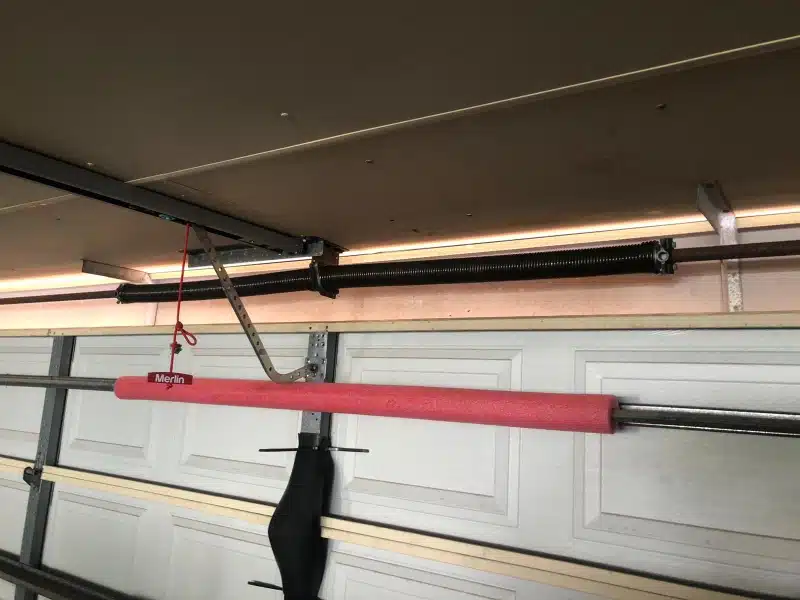
When a garage door spring lets go, the whole door stops working, and suddenly you are weighing up a repair. The most common question we get is about the two main designs: torsion springs and extension springs. This torsion vs tension springs comparison breaks down how each one works, what they cost, and which is right for your door.
Both do the same core job, storing potential energy to counterbalance the door’s weight, but they behave very differently. You will often notice worn springs before they snap, because the door feels heavy, sits unevenly, or gets noisy. Knowing the difference helps you make a smart call when it is time to replace garage door springs.
What Garage Door Springs Actually Do
Garage door springs are the muscle of the whole system, a counterbalance that carries the door’s weight so the motor and cables only guide the door rather than haul it. Your door is heavy, often over 100 kg, and the springs store energy as the garage door closes, then release energy to help lift that heavy weight as the door opens. Without them, the opener could never move a heavy door on its own. Unlike compression springs that push by squashing, garage door springs either twist or stretch, turning stored mechanical energy into controlled, balanced operation. Most garage door springs are one of two designs.
What Are Torsion Springs
Torsion springs are installed on a metal shaft mounted horizontally above the door opening. As the door closes, the spring winds up, storing potential energy; torsion springs twist to create a rotational force, or torque, that turns the cable drums and lifts the door smoothly as it opens. Because they sit above the door, torsion springs are used on most modern sectional garage doors and give precise control and smooth operation. A balanced door will also stay open wherever you leave it. They need more headroom, but they offer smoother, quieter travel. Because the load spreads evenly across the shaft, torsion setups wear more slowly and put less strain on the opener.
What Are Extension Springs
Extension springs, also called tension springs, work by stretching. Mounted along the horizontal tracks on each side, they extend and store energy as the garage door closes, then contract with a pulling force to help the door open. They resist stretching and build resistance as they extend, running through a pulley and cable on each side. Extension springs differ from torsion in that they rely on stretched coils rather than twist. These extension garage door springs are common on older, lighter residential garage doors, cost less, but generally offer a shorter lifespan. When an extension spring breaks, safety cables stop the loose spring becoming a projectile. You will still see extension springs on many older tilt and single doors around Perth, where they have done the job for decades.
Torsion Vs Extension Springs Side By Side
Here is how the two compare on the things that matter most.
• Mounting: torsion springs are mounted horizontally on a shaft above the door, while extension springs run along the horizontal tracks.
• Movement: torsion delivers controlled movement and precise control, while extension gives a simpler pulling force.
• Feel: torsion springs offer smoother, quieter operation, and extension springs can be noisier.
• Lifespan: torsion springs last around 15,000 to 20,000 cycles and extension springs about 10,000 to 15,000, so extension needs more frequent replacements.
• Cost: extension springs are cheaper to fit, while torsion carries a higher upfront cost.
• Safety: torsion springs stay contained on the shaft, while extension springs rely on safety cables to catch them if they break.
Pros And Cons Of Each Spring Type
Each type of spring has trade offs. Torsion springs cost more and need professional installation, but they give balanced operation, a longer lifespan, and smoother movement that is kinder to the opener and other components. Extension springs are cheaper and need less headroom, which suits some garage door systems, but the shorter lifespan and extra hardware mean more upkeep over time. The same springs are used across various industries and various applications, from industrial machinery to exercise equipment and trampolines, which shows how versatile a simple spring can be. That is a neat aside, but for your garage the priorities are safety, balance and a long lifespan.
Cost And Lifespan Compared
Most garage door springs last around 7 to 12 years, depending on use and the local climate. Torsion springs carry a higher upfront cost but reward you with a longer lifespan and fewer replacements. Extension springs are easier on the initial budget yet bring more frequent replacements and a bit more noise. Proper sizing matters either way: a spring matched to your door size and the door’s weight lasts far longer, and delivers better durability, than a rough guess. A correctly sized spring also protects the opener, cables and other components from extra strain.
Which Spring Suits Your Door
The right choice depends on your door. Torsion springs are suited to heavy, wide, or double sectional garage doors where balance and durability count. Extension springs can be a sensible, budget friendly fit for lighter, single residential garage doors with limited headroom. If you are unsure, we assess the door size, weight and headroom, then recommend the spring that gives the safest, smoothest result. We will also tell you honestly if your current setup is fine and only needs a service rather than new springs.
Why Spring Replacement Is A Professional Job
Whichever type you have, spring replacement is not a safe DIY task. A wound torsion spring holds enormous potential energy, and if it slips during work it can cause serious injury. The same stored energy that lifts a heavy door can break bones. Professional installation means the right winding bars, proper sizing, and safety cables fitted correctly, so the whole job is done once and done safely. In Western Australia we see DIY spring injuries most years, usually from a winding bar slipping under load, and it is simply not worth the risk to save a small call out fee. It is careful, trained work, the same discipline used with high load springs in industrial machinery.
| Case Study: A Snapped Torsion Spring In Perth
On a cold winter morning, a Perth family woke to a loud bang from the garage and a heavy double door that would not budge. A single broken torsion spring had let go overnight, leaving the full door’s weight, well over 100 kg, hanging on one tired spring and a pair of cables. Rather than risk the high tension coils themselves, they called us first thing. We measured the door and drum size, fitted a correctly matched pair of torsion springs rated for around 18,000 cycles, replaced the worn cable drums and safety cables, lubricated the rollers and hinges, and rebalanced the door for smooth operation. The whole spring replacement took about 90 minutes. The owner said the door felt lighter and quieter than it had in years, and it has run smoothly ever since. It is a clear example of why professional installation beats a risky DIY attempt on high energy components. |
Frequently Asked Questions
The spring questions we hear most often from Perth homeowners.
How Long Do Garage Door Springs Last?
Most garage door springs last 7 to 12 years. Torsion springs typically manage 15,000 to 20,000 cycles, while extension springs run about 10,000 to 15,000, so torsion offers a longer lifespan and fewer replacements.
How Do I Know Which Type Of Spring I Have?
Look above the door. A spring on a shaft mounted horizontally over the opening is a torsion spring, while springs running along the horizontal tracks on each side are extension springs. If in doubt, send us a photo.
Can I Replace Garage Door Springs Myself?
We strongly advise against it. The springs store huge potential energy under extreme tension, and a slip can cause serious injury. Professional installation with the correct tools is the safe way to replace garage door springs.
What Happens When A Spring Breaks?
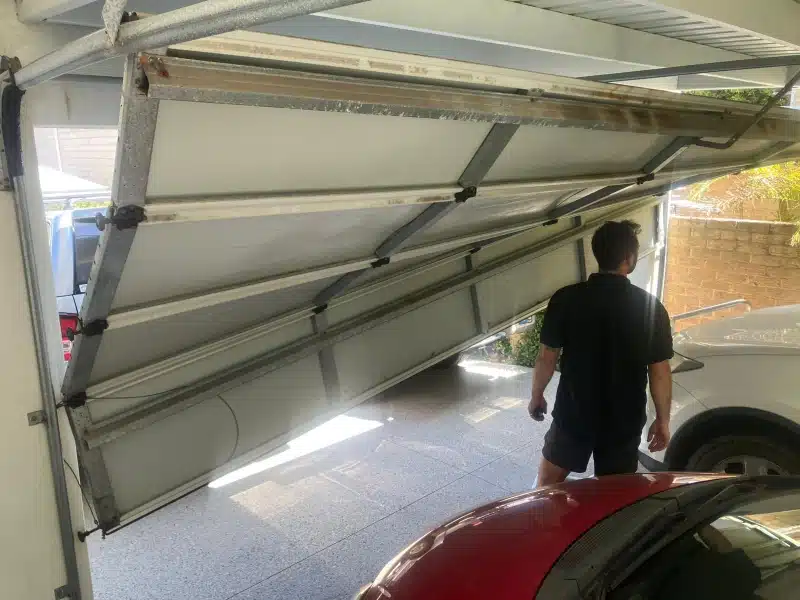
The door suddenly feels very heavy, may not open at all, or slams as it closes because nothing is counterbalancing the door’s weight. Stop using it, since running the opener against a broken spring can damage other components.
Are Torsion Springs Worth The Higher Cost?
For most residential garage doors, yes. The higher upfront cost buys smoother, quieter, balanced operation and a longer lifespan, which usually works out cheaper over the life of the door.
Need New Springs? Trust Slide & Glide
So, torsion vs extension. Torsion springs give smoother, longer lasting, balanced operation and suit heavier doors, while extension springs offer a lower upfront cost for lighter doors. Whichever your garage door uses, matched, correctly sized springs and safe fitting are what keep the door running for years.
Because spring work is high risk, leave it to the experts. Our team has replaced thousands of garage door springs across Perth over more than 12 years, we carry torsion and extension springs on our stocked vans, and we are proud Australian Garage Door Association members.
Call Slide & Glide on 0489 266 468, or email info@slideandglide.com.au, for a fast, safe garage door spring replacement from Rockingham to Ellenbrook. Our workshop is at Unit 3A/8 Hasler Road, Osborne Park WA 6017.

- How To Improve Your Garage Door Security - September 1, 2026
- Do I Need A Backup Battery For My Garage Door Opener - August 16, 2026
- DIY Vs Professional Garage Door Repairs - August 16, 2026

Social Media