


Garage door types all achieve the same outcome: secure the garage opening and protect your house. But the way different types of garage doors move and the parts inside them completely changes how the door looks, sounds, and performs. When something goes wrong, knowing the basics helps you explain the issue clearly, choose the right garage door, and avoid paying for work you do not need.
At Slide And Glide, our expert team works on modern garage doors and traditional garage doors across Perth. We see the same issues weekly: door types forced into tight ceiling space, worn springs making the whole door feel heavy, and an automatic opener working overtime because the system is not balanced. This guide explains the most common types of garage doors and the key parts so you can make confident decisions.
Garage Door Parts Explained
Before we compare garage door types, it helps to understand the parts that make the door move. Most garage door systems have four “groups” of components:
- The Door Surface: door panels or a metal curtain
- The Guide System: tracks or guides that control movement through the garage space
- The Counterbalance: springs, cables, and drums that lift the door’s weight
- The Automation And Safety: automatic opener, safety sensors, and manual release for safe operation
If one part fails, it usually forces the next part to work harder. That is why a simple spring issue can lead to motor strain, noisy operation, and costly repairs.
Sectional Garage Doors
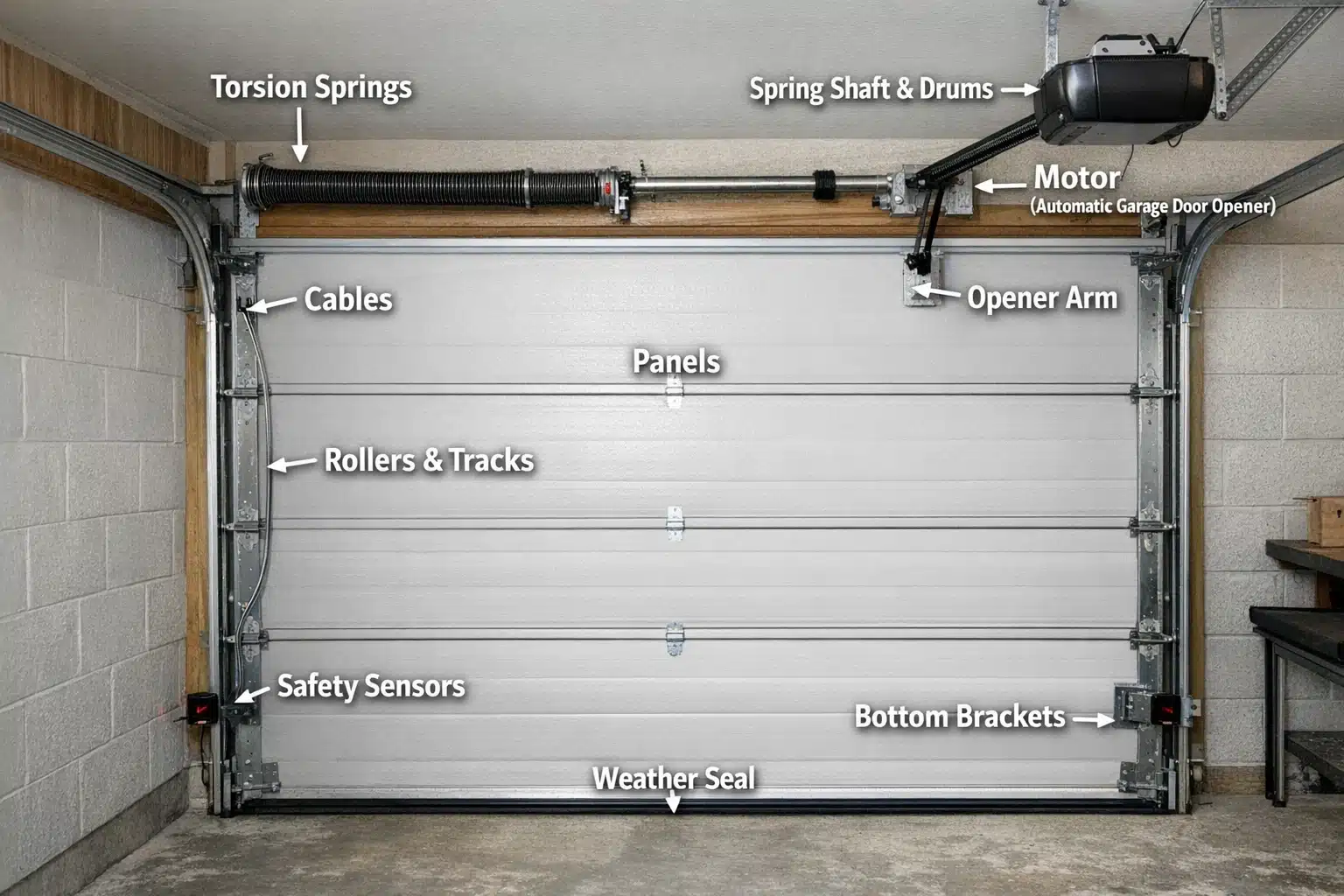
Sectional garage doors are made from horizontal steel panels hinged together. Sectional garage doors open and close in separated individual door panel sections, travelling up the garage opening on tracks, then sliding flat under the garage ceiling when open. Because the panels “fold” as they move, sectional doors offer excellent strength and security options, and it is difficult to break between the panels.
How Sectional Doors Work In Plain English
Each set of door panels is linked by hinges, with rollers guiding the door along the track. A spring system above the door opening counterbalances the door’s weight, so the automatic opener is not doing all the heavy lifting.
Common Parts In Sectional Doors
A typical sectional garage door includes:
- Door panels (steel or insulated) with optional window inserts
- Hinges between each panel
- Rollers that run inside the tracks
- Vertical and horizontal tracks fixed to the wall and ceiling
- Torsion spring shaft with drums and cables
- Automatic opener and rail mounted to the ceiling
Why Many Homeowners Choose Sectional Doors
Sectional doors offer a vast range of design options. You can choose colours, textures, windows, and insulated options that improve comfort. In many Perth homes, especially where there is more room under the garage ceiling, sectional doors suit the space well and provide a smooth, quiet feel.
They are also often less expensive than other types of garage doors when you compare like for like finishes and automation. For homeowners upgrading from tilt doors, sectional is a common move because the system seals better and supports modern safety sensors and automation.
Roller Garage Door
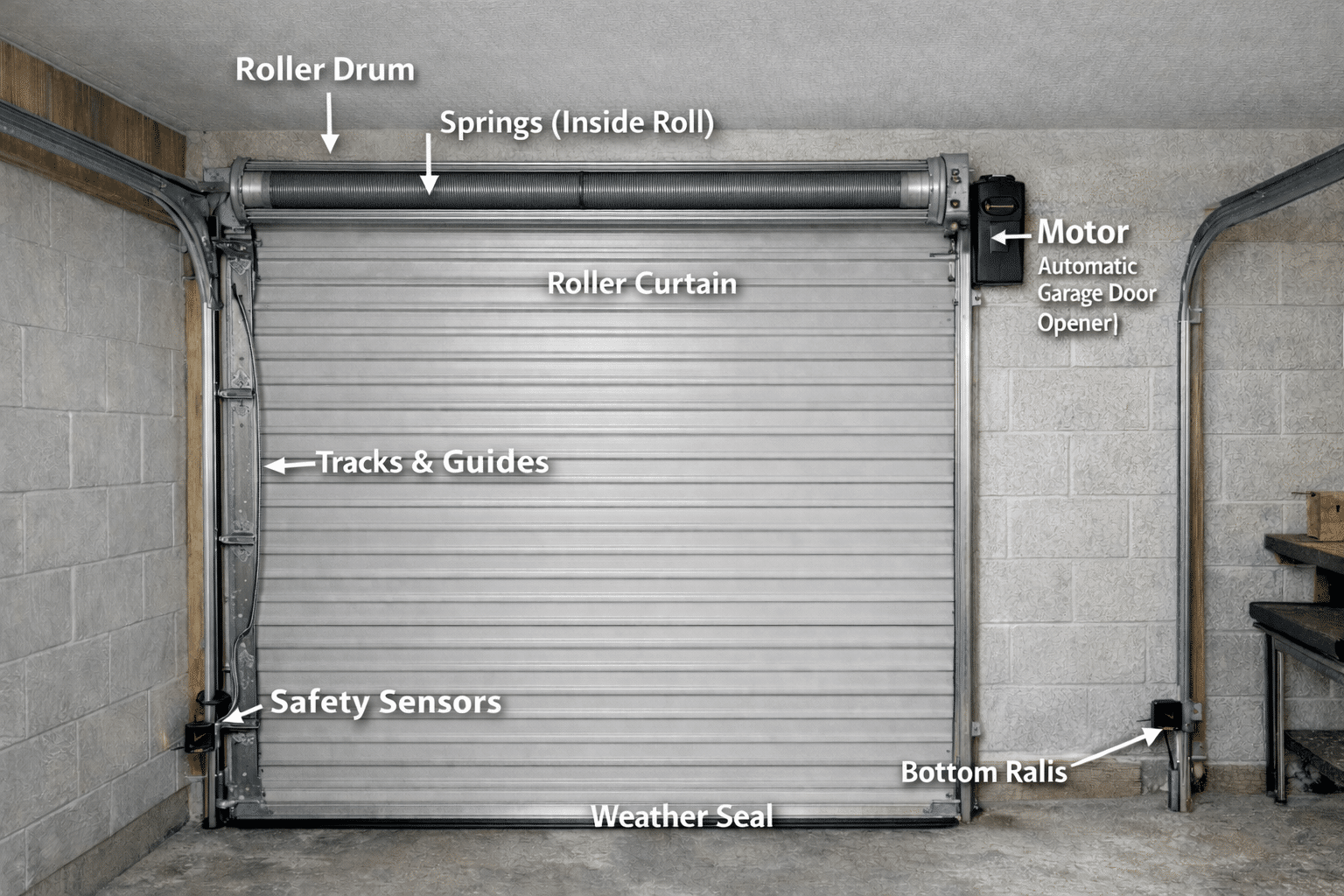
A roller garage door uses a metal curtain stamped to form a ribbed pattern. The curtain travels within guides on each side of the garage opening, then rolls up to sit above the door opening. This design preserves most of the garage’s ceiling space, so you have more room overhead for storage, beams, or lighting.
How Roller Doors Work
The curtain moves straight up and down and wraps around a drum. Springs inside the drum help lift the weight, and a roller door motor can automate the movement for convenience and security.
Main Parts Of A Roller Door
Main parts of a roller door include:
- Ribbed steel metal curtain (often steel, such as Colorbond style finishes)
- Side guides fixed to the opening
- Drum and spring assembly
- Brackets supporting the drum
- Locking system or automatic opener
Where Roller Doors Shine In Perth
Roller doors are a low maintenance option and can be installed on practically any shape or size of garage. They are ideal when ceiling space is limited, or when you want a neat roll above the opening. Roller doors are commonly associated with higher convenience and security features, especially when paired with modern automation.
You will also see rollup garage doors on commercial buildings because they are extremely strong and secure, but they can be difficult to customise and sometimes look sterile and bland. In residential settings, we focus on getting the right curtain profile, a secure guide setup, and a reliable motor so the door stays smooth and secure.
Tilt Garage Doors And Tilt Up Systems
Tilt garage doors (also called tilt up or up-and-over garage doors) are made from one solid piece. Tilt garage doors consist of a single solid panel that swings on side arms and tilts upward when opened, then sits under the ceiling.
What To Know About Tilt Doors
Up-and-over garage doors are popular for their simple, sturdy construction and low-effort operation when the springs are in good condition. The main limitation is space requirements. Tilt-up garage doors require ample clearance, often needing about 3 to 4 feet in the driveway to open because the door swings out before it lifts.
Common Parts In Tilt Doors
A basic tilt garage door includes:
- One solid piece door leaf and frame (steel, timber, or composite material, including timber or wood finishes)
- Side arms and pivot hardware
- Springs or counterweights to help lift the whole door
- Short guides or support wheels on some designs
In Perth, many homeowners with older tilt doors call us when the door becomes heavy or noisy. Once the springs wear, the whole door can feel unsafe. In those situations, we often recommend a new garage door that better suits the garage space and modern automation.
Side Hinged Garage Doors
Side hinged garage doors are hinged doors that open like a pair of traditional hinged doors. Hinged garage door systems swing open onto the driveway, so you need clear space for opening outwards.
How Side Hinged Doors Work
Side hinged doors use hinges mounted to the jamb and typically open in two leaves (side hinged doors). You can open one leaf for easy access without lifting the whole door, which is handy if you use the garage as a storeroom or workshop.
Key Parts In Side Hinged Doors
Key parts include:
- Two leaves (steel, timber, wood, or composite)
- Heavy duty hinges
- Handles, locks, and drop bolts
- Stops or stays to hold doors open
Hinged garage doors can be customized with various hinge, handle, and lock choices, which is great for matching traditional garage doors or character homes. The trade-off is you must plan for driveway clearance and good sealing around the garage opening.
Side Sliding Doors And Round-The-Corner Systems
Side-sliding garage doors have vertically oriented panels that wrap around the inside wall of the garage when open. Instead of lifting to the ceiling, the door moves sideways and stacks along wall space.
When Sliding Systems Make Sense
This style is less common, but it is useful when the garage ceiling is cluttered or there is not enough ceiling space for tracks or a drum. It can be the right garage door option when you need to keep the ceiling clear and you have enough wall space to store the open door.
Main Parts In Sliding Systems
A typical sliding system includes:
- Vertically oriented panels or narrow slats
- Floor and ceiling tracks that guide the door
- Multiple rollers to carry weight smoothly
- Manual or motorised operation depending on design
Garage Door Styles And Design Options
Garage door style is what you see from the street, and it matters because aesthetics influence curb appeal. The design options for garage doors include colours and materials, plus features like windows and surface textures.
Common style families include:
- Classic ribbed steel for sheds and traditional garage doors
- Modern garage doors with clean, flat panels
- Carriage or heritage looks that mimic older hinged doors
Sectional doors offer the widest range of styles because we can vary door panels, windows, finishes, and insulated construction while keeping the same lifting mechanism.
Garage Door Sizes And Clearance
Your garage opening and available space decide what will fit and operate safely. Before choosing door types, check:
- Opening width and height
- Headroom above the opening (ceiling space)
- Backroom inside the garage space
- Sideroom for tracks, guides, or hinges
A roller garage door preserves most ceiling space because it rolls above the opening. Sectional doors need a mix of headroom and backroom so the panels can travel under the ceiling. Tilt doors need driveway space because they swing open. Side hinged garage doors need space for opening outwards.
Roller Door Vs Sectional Doors
Both are excellent options, but the “better” choice depends on your garage, budget, and priorities. Budget is an important consideration when choosing a garage door, and so is how you use the opening day to day.
Choose A Roller Door If
- You need to keep the ceiling clear and maximise ceiling space
- You want a compact, low maintenance solution
- You prioritise security and a clean, simple setup
- Your garage opening is an unusual size or shape
Choose Sectional Doors If
- You want more design options, windows, and insulated options
- You want quieter operation and a smoother feel
- You want strong security and strength through the panel system
- You want a door that suits modern garage doors and façade design
Automation features are increasingly popular in garage doors for convenience, whether you choose a roller door or sectional system. The key is matching the motor to the door’s weight and making sure the springs are correctly balanced.
Key Factors When Choosing The Right Garage Door
To choose the right garage door, focus on practical points first, then style.
- Space requirements in the ceiling, wall space, and driveway
- How often you use the garage and whether you want automation
- Security needs and locking features
- The look you want, including panels, windows, timber, steel, or wood finishes
- Maintenance expectations and long-term reliability
At Slide And Glide, our expert team starts with how you use the garage. Sometimes a repair and motor upgrade is enough. Other times, a new garage door is the smarter option because the current system is the wrong match for the space requirements.
Conclusion And Next Step
Understanding garage door types and the main parts behind them makes it easier to choose confidently and spot issues early. Whether you have sectional garage doors, a roller garage door, tilt garage doors, or side hinged garage doors, the right setup comes down to space, security, design options, and how the door needs to operate in your garage.
If your door is noisy, heavy, slow to roll, or not opening smoothly, we can inspect the system, explain what is worn, and recommend the most practical fix or replacement.
Ready to choose the right garage door or book a repair in Perth? Contact Slide And Glide today to arrange an on-site assessment and keep your door secure, smooth, and reliable.

- How To Improve Your Garage Door Security - September 1, 2026
- Do I Need A Backup Battery For My Garage Door Opener - August 16, 2026
- DIY Vs Professional Garage Door Repairs - August 16, 2026


Social Media