


The average garage door lifespan for most garage doors in Perth is 15 to 30 years, while a garage door opener typically delivers 10 to 15 years when serviced on schedule. Your actual result depends on daily usage, local climate, material selection, installation quality and how consistently you follow a maintenance schedule. This guide gives Perth and WA homeowners practical tips to extend the garage door lifespan, decide when to repair or replace, and budget for a new garage door if the entire door or garage door motor has reached the end of life.
How long should a garage door last?
For a typical garage door that is installed correctly and serviced annually, plan for 15–30 years for the door and 10–15 years for the opener. A cycle is one open plus one close.
- 2 cycles per day: expect 15–20 years on standard torsion springs
- 3 cycles per day: expect 12–18 years
- 4 cycles per day: expect 10–15 years unless you upgrade to high-cycle springs
Quality of the fit-out matters. A door that is balanced, tracks that are plumb and a spring that is sized to the door weight will reduce stress on the garage door motor and moving parts.
What factors affect the lifespan of a garage door?
Several factors drive the lifespan of your garage door more than the brand on the badge.
- Daily usage and cycles: More trips in and out means more daily wear on springs, rollers and cables. High-use homes should consider high-cycle torsion springs.
- Door weight and balance: The spring system must counterbalance the door weight. Poor balance forces the opener to do the heavy lifting, shortening the garage door opener’s lifespan.
- Material and construction: Heavier steel skins resist denting. Aluminium resists corrosion. Timber needs sealing discipline. Composites offer stiffness with low upkeep.
- Installation quality: A square opening, true track alignment and correct spring sizing are critical. Professional installation by skilled technicians usually pays for itself in longevity.
- Local climate: Salt air, summer heat, wind and dust accelerate corrosion and fatigue without protection.
- Hardware and accessories: Nylon rollers with sealed bearings, stainless hardware in coastal areas and quality hinges reduce mechanical issues.
- Opener choice and setup: Belt-drive and quality direct-drive openers run quietly and protect gears. Modern remotes with Security+ 2.0 reduce interference and false triggers.
- Care and checks: Regular maintenance keeps the door’s balance within spec, prevents worn out springs from damaging other components and preserves the garage door’s warranty.
Do insulated garage doors last longer?
Often yes. Insulated sandwich panels are stiffer and resist flexing, so hinges and rollers experience less movement and fasteners stay tight for longer. The insulation also dampens vibration, which helps the opener and reduces rattles.
- Choose mid-range R-values for attached garages in Perth.
- Pair insulated sectional panels with a quiet belt-drive opener to cut vibration near bedrooms.
- Better panel stiffness can improve energy efficiency and reduce noise in the driveway.
What is the lifespan of a wooden garage door?
Well maintained timber delivers 15–25 years. Success comes from moisture management and UV protection.
- Re-seal or repaint on a set cadence, often every 2 to 4 years depending on exposure.
- Seal all edges, not just the face, to keep out water.
- Fit drip edges under the head and maintain bottom seals so storm water and roof run-off do not wet the panel edges.
- Provide shade where possible on west-facing doors.
How does steel vs aluminium lifespan compare?
Both steel and aluminium can reach 20–30 years with the right spec.
- Steel leads dent resistance at comparable thickness and supports a wide design range. Add foam-infill for stiffness and quieter operation.
- Aluminium excels at corrosion resistance in coastal suburbs and lowers load on the opener due to lower mass. Thin skins can dent, so choose thicker planks or reinforced designs.
- Near the coast, specify marine-grade powder-coat and stainless hardware for tracks and fixings.
How often should garage doors be replaced?
Plan to replace your garage door at 15 to 30 years, or sooner when safety, structure or yearly repair spend makes replacement cheaper than ongoing fixes.
- Rule of thumb: if projected repairs in the next 12 months exceed 30% of a replacement, upgrade.
- Replace if the system lacks compliant photo-eyes or reliable auto-reverse, or if parts for your opener are obsolete.
- Consider the lift in curb appeal and sealing if you plan to sell within the warranty period of a new motor and door.
What wears out first on a garage door?
Door parts have different duty cycles. The earliest items to age are:
- Torsion springs or extension springs: common ratings are 10,000–25,000 cycles. Signs of fatigue include a heavy door, slipping drums and a bang when a spring breaks.
- Rollers: flat-spotted or wobbly rollers cause noise and jerky travel. Upgrade to nylon, sealed-bearing rollers.
- Cables and hinges: look for frayed strands and elongated hinge screw holes.
- Opener gears and logic boards: heat, vibration and interference shorten life. Keep force settings within spec and use compatible LEDs.
Does climate affect how long a garage door lasts?
Yes. WA’s coastal environment and wind events can shorten the lifespan of a garage door without proper specs.
- Choose marine-grade powder-coat, stainless hardware and consider aluminium tracks in salt streets.
- Rinse salt mist during dry, windy periods.
- For wide doubles, confirm wind rating and bracing to suit your exposure category.
- Keep dust out of tracks and under the bottom seal to prevent binding.
How can I make my garage door last longer?
A small amount of attention prevents mechanical issues and preserves warranties.
- Service annually, or twice yearly for high-use or coastal homes.
- Lubricate moving parts quarterly. Use a light, non-silicone spray on hinges and roller stems. Do not grease tracks.
- Balance test monthly: pull the manual release, lift to waist height and let go. A balanced door should stay near position.
- Photo-eye and auto-reverse tests monthly: clean lenses and run a 40 mm block test.
- Track alignment: verticals should be plumb and secured to the wall, horizontals level with correct back hang.
- Interference control: use garage-compatible LED bulbs and keep routers away from the opener’s antenna.
What signs show my garage door needs replacing?
These signals indicate the door is at or past its practical life:
- Cracked, rusted or swollen panels, delamination in composites or recurring water marks
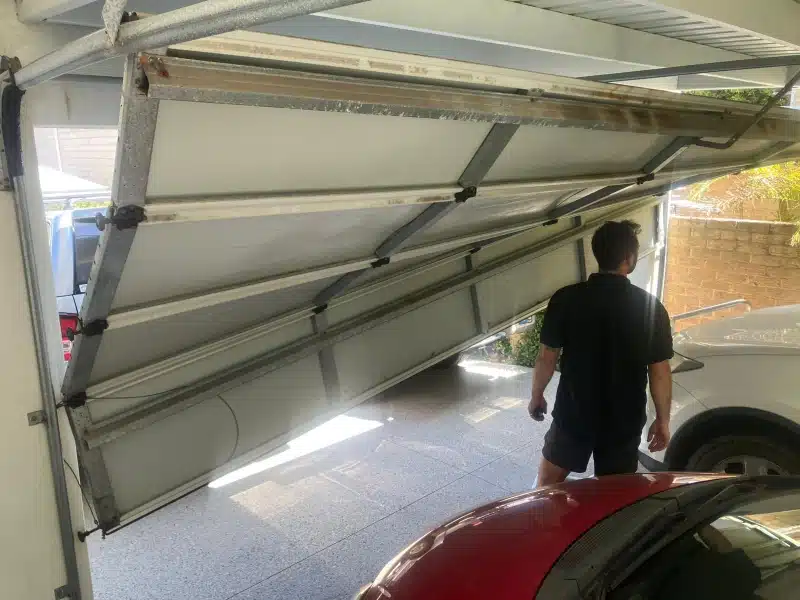
- Warped tracks, frequent off-track events or binding despite lubrication
- Jerky travel and louder operation soon after a service call
- Safety failures: photo-eyes that drop out or auto-reverse that does not respond
- Rising energy bills due to poor sealing and gaps
- Frequent breakdowns that suggest several components are failing in sequence
What garage doors last the longest?
For garage door longevity choose insulated sectional doors or well specified roller doors with quality hardware and a professional fit.
- Insulated steel or composite sectional panels for stiffness and noise control
- Nylon rollers, sealed bearings and correctly sized high-cycle springs
- Belt-drive opener with soft start and stop to protect gears
- Local support and parts availability for faster repairs and excellent service
What maintenance tips extend lifespan?
Keep it simple and regular.
- Wipe and inspect weather seals each season.
- Clear leaves and grit from tracks, especially on roller garage door installations.
- Do not increase opener force to mask poor balance. Fix balance first.
- Record service dates. Manufacturers ask for evidence to confirm a warranty period if you claim on door parts or electronics.
- If your opener light uses a bulb that interferes with the remote, fit a garage-compatible LED.
How many cycles does a typical garage door last?
Spring rating is the best proxy for how long a garage door will last between major overhauls.
- Standard torsion springs: around 10,000 cycles
- Upgrades: 20,000–25,000 cycles for high-use homes or multi-car driveways
Convert cycles to years:
- 2 cycles per day: 10,000 cycles equals about 14 years, 20,000 equals 27 years
- 3 cycles per day: 10,000 equals 9 years, 20,000 equals 18 years
- 4 cycles per day: 10,000 equals 7 years, 20,000 equals 14 years
Correct spring sizing protects the opener by keeping lift forces within specification.
When is it better to repair vs replace?
Repair minor hardware issues. Replace when the shell is failing, parts are obsolete or faults recur across different components.
Three-step decision path
- Check age and structure: over 15 years with panel cracks, rust or rot usually favours replacement.
- Count failures: if you need more than two repairs a year, the pattern suggests end of life for several components.
- Compare costs: if repairs in the next 12 months exceed 30% of a replacement, choose a high quality door with modern safety features and better sealing.
What garage door materials are most durable?
Steel and composite offer the longest horizons, aluminium suits coastal areas, and timber requires disciplined care.
| Material | Typical lifespan | Upkeep level | Dent resistance | Corrosion resistance | Coastal fit |
|---|---|---|---|---|---|
| Insulated steel sectional | 20–30 yrs | Low to medium | High at thicker skins | Very good with quality powder-coat | Very good with marine-grade finish |
| Aluminium sectional | 20–30 yrs | Low | Medium at thin skins | Excellent | Excellent with stainless hardware |
| Composite sectional | 20–30 yrs | Low | High | Excellent | Excellent |
| Timber sectional or tilt | 15–25 yrs | Medium to high | Medium | Depends on sealing | Good with disciplined sealing |
If you like timber looks with low upkeep, consider composite skins over insulated cores. This gives a premium finish with less frequent sealing.
What are the most common failures by age?
- Years 1–5: installation faults, noisy tracks, sensor alignment. Fix with alignment, limit setting and sensor cleaning.
- Years 5–10: roller and hinge wear, cable stretch, opener bulb interference. Replace rollers and hinges, adjust cables, fit compatible LED bulbs.
- Years 10–15: spring fatigue, cable fray, opener gear wear. Decide between spring upgrade and planned replacement.
- Years 15+: panel corrosion or rot, frequent opener failures, obsolete parts. Plan for a new garage door and opener together to reset reliability and improve curb appeal.
How much does it cost to replace an old garage door?
Budget $1,600–$6,500+ supplied and installed in Perth depending on size, insulation and opener. Typical ranges:
| Door size | Base supply and install | With insulation and premium opener |
|---|---|---|
| Single | $1,600–$3,200 | $2,400–$4,200 |
| Double | $2,800–$5,500 | $3,800–$6,500+ |
Where can I book a garage door inspection or tune-up?
Book a professional inspection to assess balance, safety and component wear. Annual visits suit most homes. Choose twice yearly for coastal locations or high-use families. Same-day attendance is recommended for safety faults, broken springs or a door that will not close properly.
FAQs
How long do garage doors last?
15–30 years for doors and 10–15 years for openers with regular garage door maintenance and correct setup.
Do insulated garage doors last longer?
Often yes. Stiffer panels reduce flex and vibration, which slows wear on hinges, rollers and the opener.
What wears out first?
Springs and rollers, followed by cables, hinges and opener gears.
Does climate affect lifespan?
Yes. Local climate factors like salt air, heat and wind accelerate wear without marine-grade finishes and stainless fasteners.
When should I replace instead of repair?
Replace when yearly repairs exceed about 30% of a new door, or when structure or safety fails.
Final Thoughts
Most garage doors last between 15 and 30 years, depending on the material, how often you use them, and how well they are installed and maintained. With proper garage door installation, regular servicing and timely repairs, you can stretch the life of both the door and the opener, keep it running smoothly, and avoid costly breakdowns.
At Slide and Glide, we help Perth homeowners get the best performance and value from their garage doors. Whether you are planning routine garage door servicing, need a problem fixed, or are exploring options for a new garage door, our technicians focus on quality, safety and long term reliability.
Contact Slide and Glide today to arrange a service, inspection or personalised replacement quote.

- How To Improve Your Garage Door Security - September 1, 2026
- Do I Need A Backup Battery For My Garage Door Opener - August 16, 2026
- DIY Vs Professional Garage Door Repairs - August 16, 2026

Social Media